



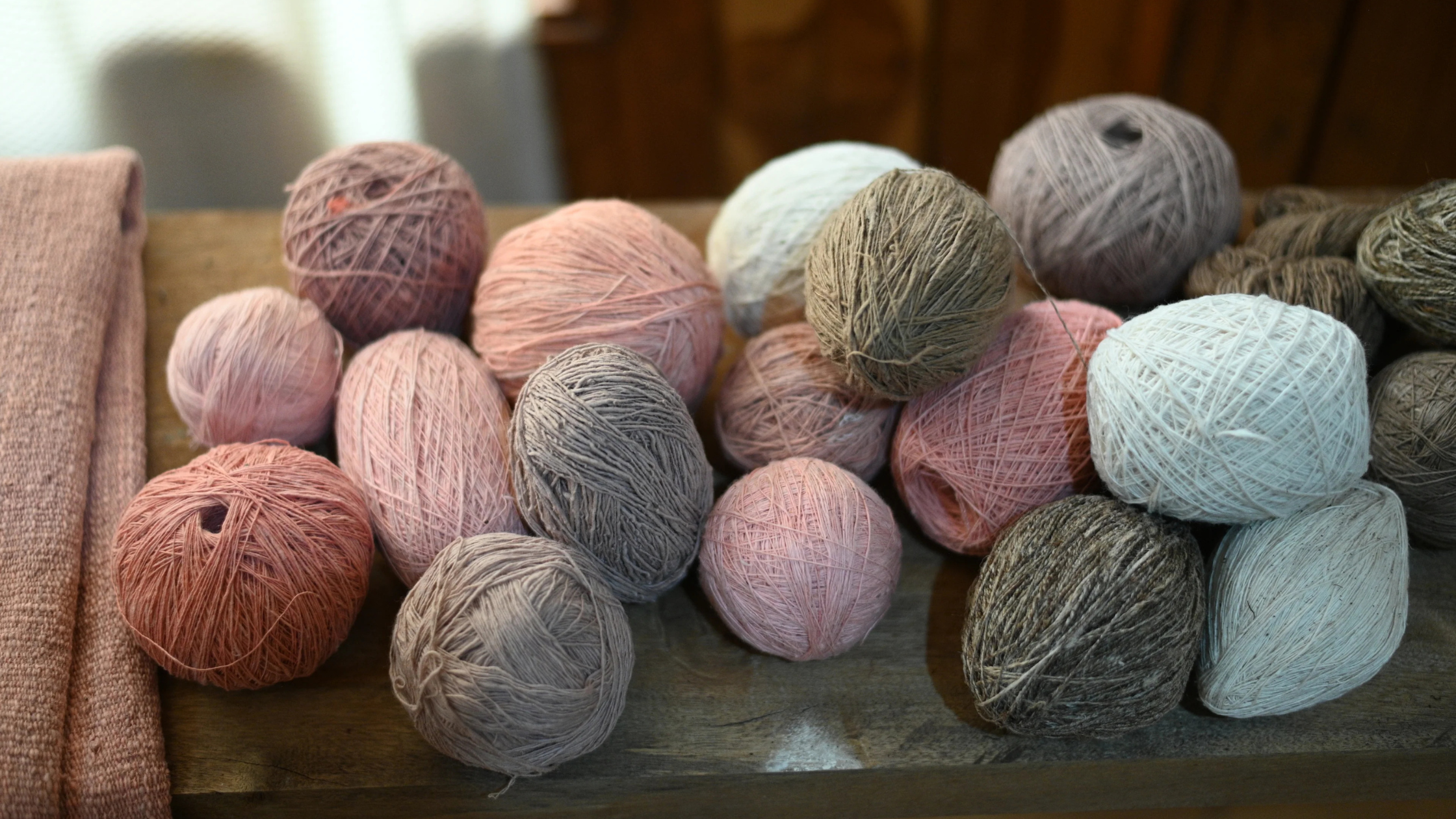
Imagine a loom so ancient it has no frame. No iron rods, no factory floor, no humming machinery. Just a strap of cloth around a woman’s waist, a length of yarn, and centuries of knowledge stored in her hands. In the hills of Phek district in Nagaland, this is not a museum exhibit — it is Monday morning. It is how over 600 women begin their week, weaving not just cloth, but livelihoods, dignity, and an entire community’s future into every thread. This is the story of Chizami Weaves — and it is one Northeast India desperately needs the rest of the world to hear.
A Village, a Vision, and Seven Women
What began in 2008 as a small livelihood initiative by the North East Network (NEN) with just seven dedicated weavers has since evolved into something far larger than anyone imagined. Today, managed by NENterprise — a Public Charitable Trust registered in 2017 — Chizami Weaves annually engages 500 to 600 artisans from 16 villages across Phek District. Since its inception, the organisation has supported over 1,000 artisans in total.
The women behind these numbers are not factory workers. They are farmers. Artisans associated with Chizami Weaves primarily belong to the Chakhesang tribe, ranging from ages 18 to 75 years old, most of whom have been learning the art of weaving since childhood. Farming responsibilities keep them busy from April to October. When the agricultural season closes, weaving becomes their main focus — and a vital, dignified source of income.
From seven women gathering around a shared idea to a network of over a thousand — all from the hills of a village most of India could not find on a map. That journey alone is worth paying attention to.
The Loom Around the Waist
The loin loom — or backstrap loom — is worth understanding because it is central to everything Chizami Weaves stands for. It is one of the oldest weaving technologies on earth. The strap pulled around the weaver’s back holds the entire structure of the loom with the required tension, enabling a sturdy, intricate weave pattern. It requires no electricity, no workshop, no special infrastructure — just a woman, her knowledge, and a will to create.
Chizami Weaves has built its entire production model around this ancient tool. The organisation adopts a decentralised production approach that puts artisans first. Weavers work from the comfort of their own homes, setting their own pace and managing their monthly production goals — balancing weaving with farming, domestic responsibilities, and community life. Raw materials, design guidelines, and training are provided by the organisation, but creative agency stays firmly with the weaver. They decide the motifs. They decide the products. The craft remains theirs.
From Seven Colours to a National Market
The early days were not without their friction. The Chakhesang weavers were accustomed to working within a tight palette of tribal colours — black, white, red, green, and some yellow. Introducing contemporary designs and new colour combinations was met with scepticism, even amusement. But gradually, through patient collaboration with designers and the weavers’ own creative confidence, the product range transformed.
Today, Chizami Weaves ships cushion covers, table runners, stoles, shawls, bags, mats, and mekhlas to retailers in Delhi, Bengaluru, Kolkata, and Mumbai. Their products appear at some of India’s most prestigious cultural events — the Hornbill Festival, the Kala Ghoda Festival, the Aadi Mahotsav Mela, and more. Training programmes delivered by Master Weavers from within the community itself cover quality control, standardised sizing, innovative design, and colour combinations — ensuring that every piece that leaves a weaver’s home meets a standard that the national market demands.
This is not just craft preservation. It is craft evolution.
Fair Wages, Reject Pieces, and Real Dignity
What separates Chizami Weaves from a typical handicraft enterprise is its philosophy — one that is written into its very values. Quality, dignity, integrity, accountability, inclusivity, and sustainability are not decorative words on a website. They shape everyday decisions.
Around 60 percent of weavers are regular contributors, earning between ₹5,000 and ₹6,000 per month. In rural Nagaland, that is genuinely transformative income. But more telling is how the organisation treats those who are still learning. Chizami Weaves pays even for reject pieces — acknowledging that younger, developing weavers cannot be turned away simply because their work is not yet perfect. This is a deliberate investment in the long-term future of a craft, not just a transaction.
The organisation is also deeply inclusive in who it works with. Widows, single women, women with disabilities, women and girls of all age groups — Chizami Weaves actively creates space for those most often pushed to the margins. Zero-waste production practices and the use of natural fibres, organic cotton, and plant-based dyes further anchor the enterprise in responsibility — to both its weavers and the environment.
Beyond the Loom: A Community That Cares for Itself
Chizami Weaves has long understood that a woman’s dignity cannot be separated from her health, her children’s safety, or her voice in the community. This is why the organisation runs social enhancement programmes that reach well beyond the weaving unit.
For children of weavers, there are menstrual health and personal safety awareness sessions, and arts and crafts workshops that blend creativity with environmental responsibility. For women, reproductive health camps and eye care services are brought directly to their villages. Every year, Chizami Weaves marks International Women’s Day, National Handloom Day, One Billion Rising, and the 16 Days of Activism Against Gender-Based Violence — bringing weavers together for exhibitions, design competitions, cultural performances, and testimonial-sharing sessions that build both confidence and community.
Their top ten earning weavers are honoured every year. Their voices are heard in public. Their stories are told.
The Thread That Must Not Break
There is an urgency beneath the beauty of Chizami Weaves. Traditional textile weaving in Nagaland is practiced exclusively by women — and like many indigenous crafts across Northeast India, it faces the quiet threat of generational discontinuity. Chizami Weaves has responded by involving young girls directly in the weaving community, and by ensuring that Master Weavers from within the community itself lead the training of the next generation.
The organisation’s vision is clear: a future where women are economically empowered, live with dignity, and lead the way in building resilient, thriving communities. Its mission is to make that future real — not through charity, but through craft, respect, and the quiet, powerful act of picking up a loom.
Every shawl carries a pattern passed from grandmother to daughter. Every cushion cover ships a piece of Chakhesang identity to a home in a city that knows very little about the hills of Phek. Every purchase is, in a small but real way, a vote for the women who made it — and for the culture they refuse to let disappear.
This is what Chizami Weaves is weaving. And it is far more than cloth.
Chizami Weaves products are available at their outlets in Chizami and Kohima, through partner retailers across India, and via their social media platforms. When you buy one, you are not just buying a textile — you are holding a thread that connects you to a village, a tradition, and a woman who wove it with her whole body.




Leave feedback about this